Shop by Skill

Sometimes you already know what you want a child to get practice at — pinching, counting, pouring, climbing, naming things. Each shelf here gathers toys from across the ages that ask for the same kind of work, so you can match the toy to the job rather than to a birthday.

Not sure which skill to work on?

Take the quiz

What each skill looks like at home

Most toys build more than one skill. Each card says what the skill is, how to spot it, and which toys help.

Free printable: toy shelf by age

  • Fine motor skills

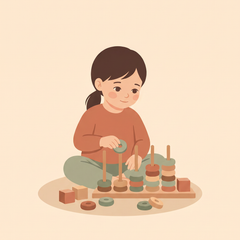
    Fine motor is the small work of fingers and wrists: pinching, twisting, threading. By 3 years, most children string large beads. Lacing toys, pegboards and a screwdriver bolt board give busy fingers a real job.

  • Sensory play

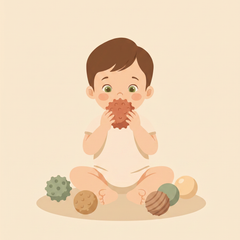
    Sensory play is learning through touch, sound and sight. If your child shakes everything to hear it, or pulls every tissue from the box, this is it. A rain stick, a spinning drum or a water drawing mat feeds that curiosity.

  • Math and logic

    Math starts with real things: counting, sorting, comparing. Watch for the child who counts the stairs out loud, or lines up spoons from big to small. A counting hedgehog, a number train and an abacus let them count what they can touch.

  • Language and literacy

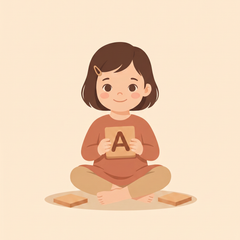
    Language grows when a child names things and tells stories about them. Listen for the running commentary: “Cow goes in. Cow is sleeping.” A felt story board, a busy book and a standing easel give them something to talk about, and later to draw.

  • Practical life

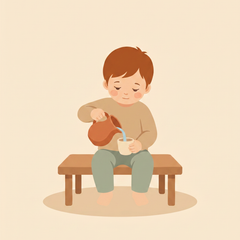
    Practical life means real jobs at a child’s size: pouring, cutting, wiping. By 3 years, most children use a fork. If yours grabs the broom when you sweep, kids’ cooking tools or a cleaning set let them join in.

  • Gross motor skills

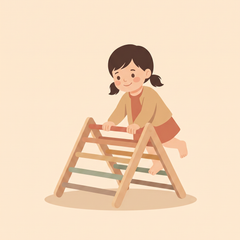
    Gross motor is the big stuff: climbing, balancing, jumping. You’ll spot it in the child who climbs the back of the sofa or walks every curb like a tightrope. Balance stepping stones and climbing wall holds give that energy somewhere to go indoors.

  • Problem solving

    Problem solving is trying, missing and trying again. It looks like a child turning a piece around until it drops in. A shape sorter box, a bead maze or a color-slide puzzle has one clear answer, so they know when they’ve got it.

Questions about shopping by skill

Follow your child. Watch what they do over and over this week, like pouring, climbing or counting, and pick the shelf that matches. Not sure? Take the quiz above.

Yes, most do. Our color-sorting cups sit on the fine motor, practical life and problem-solving shelves at once, because they do all three jobs.

Children build skills at different speeds, and an early talker can be a later climber. If something worries you, the CDC says don’t wait: talk with your child’s doctor.

Free shipping over $70
Safety-tested & non-toxic
Secure checkout
60-day returns