Shop by Type
Sometimes you are not shopping for a skill or an age. You want a specific thing: a puzzle, a set of stacking cups, something quiet that packs small. These shelves are sorted by what the toy actually is.

Sometimes you are not shopping for a skill or an age. You want a specific thing: a puzzle, a set of stacking cups, something quiet that packs small. These shelves are sorted by what the toy actually is.
If you know the object
Not sure which kind of toy fits?
Take the quizEach card says what the toy is for, who it suits, and one tip from home.
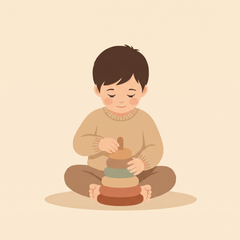
Wood is warm, a little heavy, and does nothing until your child does. Ours run from a rain stick for babies to an abacus for 5 year olds. Tip: put out three or four at a time and swap them weekly.
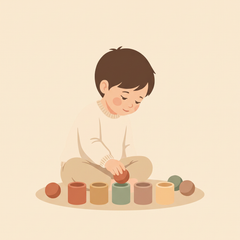
These toys ask one question: does it fit? From an activity cube at 1 to a stick-drop tower at 5, the answer is in their hands. Tip: start with fewer pieces than the box holds, and add more later.

Matching teaches a child to spot what is the same, then remember where it was. From about 3: color-sorting cups, up to a memory game for 5 year olds. Tip: start the memory game with four pairs, face up.
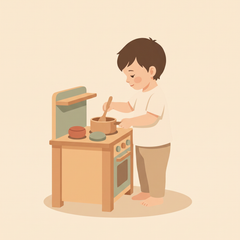
Young children love to copy what grown-ups do. From about 3, a play kitchen set, tea set or fruit cutting set lets them cook, pour and serve like you. Tip: let them “make dinner” while you make the real one.
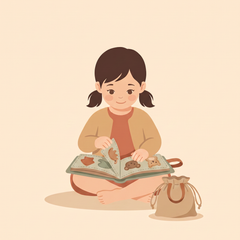
Small and quiet, for planes, car seats and waiting rooms. Babies get a tissue box sensory cube; preschoolers get a water drawing mat, busy books and a bead maze. Tip: hide one toy before the trip and bring it out only on the road.

These make a sound only when your child plays them, so every sound is theirs. A rain stick suits the first year; a music table or spinning drum suits ages 3 to 5. Tip: copy their rhythm, then let them copy yours.
Wood has weight, texture and a quiet sound, and it needs no batteries. Not everything is wood: you’ll also find felt busy books and a silicone stacker where something softer works better.
Start with what your child already does all day. A child who empties every drawer will love sorting. A child who follows you into the kitchen will love pretend play. Not sure? Take the quiz above.
Fewer than you think. A few toys on a low shelf, swapped every week or so, are easier to choose from than a full toy box. How many toys should a toddler have?


