Shop by Age
Age bands are rough, and most children sit somewhere either side of them. Treat these as a starting point rather than a rule: the shelf worth opening is the one matching what your child can nearly do, not what she turned last month.

Age bands are rough, and most children sit somewhere either side of them. Treat these as a starting point rather than a rule: the shelf worth opening is the one matching what your child can nearly do, not what she turned last month.
Right for where they are now
Not sure which age group fits?
Take the quizThese milestones come from the CDC’s “Learn the Signs. Act Early.” checklists. Each age links to its source.

By 6 months, most babies reach for a toy they want and mouth things to explore them. By 9 months, they pass toys from hand to hand and bang two things together.
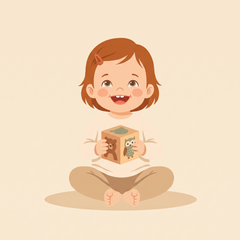
By 1 year, most children put a block in a cup and pick up small bits of food between thumb and pointer finger.
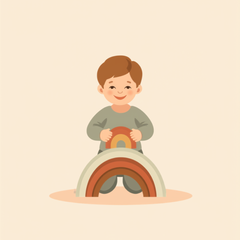
By 2 years, most children hold a container in one hand and take the lid off with the other, and try the knobs and buttons on toys.

By 3 years, most children string large beads, draw a circle when you show them how, use a fork, and join other children to play.
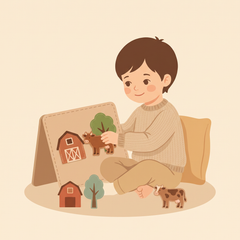
By 4 years, most children pretend to be something else during play, name a few colors, and hold a crayon between fingers and thumb.
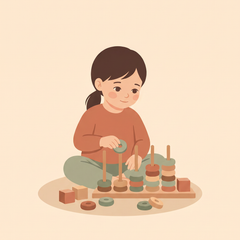
By 5 years, most children count to 10, write some letters of their name, and take turns when playing games with other children.
From birth. Our shelves run from babies (0 to 12 months) up to 4 and 5 year olds.
Start with the age, then match what your child can almost do. Between two shelves? Look at both.
Milestones are things most children (75% or more) can do by a certain age. If your child isn’t doing one yet, or something worries you, the CDC says don’t wait: talk with your child’s doctor.


